
Home Office Flooring: Durability for Rolling Chairs and Heavy Desks
Home offices have changed. What once served as a spare bedroom or temporary setup is now a full-time workspace used for long days, video calls, deadlines, and daily routines that rival a traditional office. That places very different demands on the floor beneath your desk.
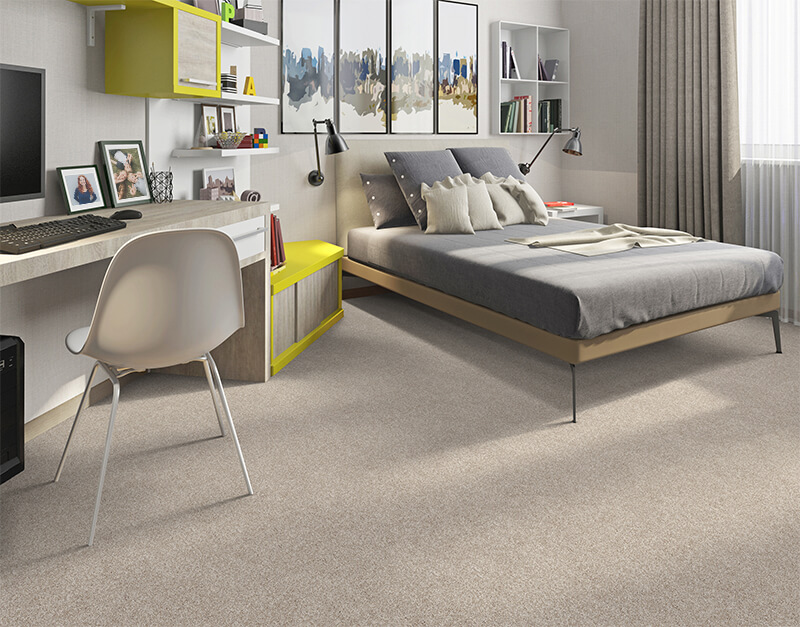
A home office introduces rolling chairs, heavier desks, constant movement, and hours of standing or sitting in one place. The goal is to choose a surface that supports the workday without sacrificing comfort or the overall look of your home.
What Makes a Home Office Floor Different
A dedicated office workspace combines residential living with commercial-style use. Office chairs roll, concentrating weight onto small contact points that can wear finishes unevenly. Standing desks often weigh more than traditional furniture and remain fixed in place, increasing the risk of dents or compression over time.
At the same time, the room still needs to feel like part of the home. A successful office floor balances durability, comfort, sound control, and design so the space works hard during business hours and still feels inviting after the workday ends.
Rolling Chairs and Furniture
The most immediate stress on a home office floor comes from movement and weight. Unlike a bedroom or guest room, this space experiences constant rolling traffic in a tight radius, along with heavy furniture that may never shift position.
When deciding on flooring for this kind of use, focus on construction details that improve durability and surface stability.
- Caster Pressure Points: Standard office chair wheels apply significant pressure in small areas. Floors with thick wear layers, aluminum oxide finishes, or dense cores resist visible track marks and surface dulling.
- Surface Hardness and Dent Resistance: Harder hardwood species such as oak or hickory, rigid-core luxury vinyl, and high-performance laminate provide stronger resistance to compression from desk legs and storage cabinets.
- Finish Sheen Matters: Matte and low-sheen finishes disguise minor scratches and rolling patterns more effectively than glossy coatings.
- Stable Subfloors and Underlayment: A solid installation prevents flexing beneath chair paths, reducing long-term wear and helping eliminate the need for plastic chair mats.
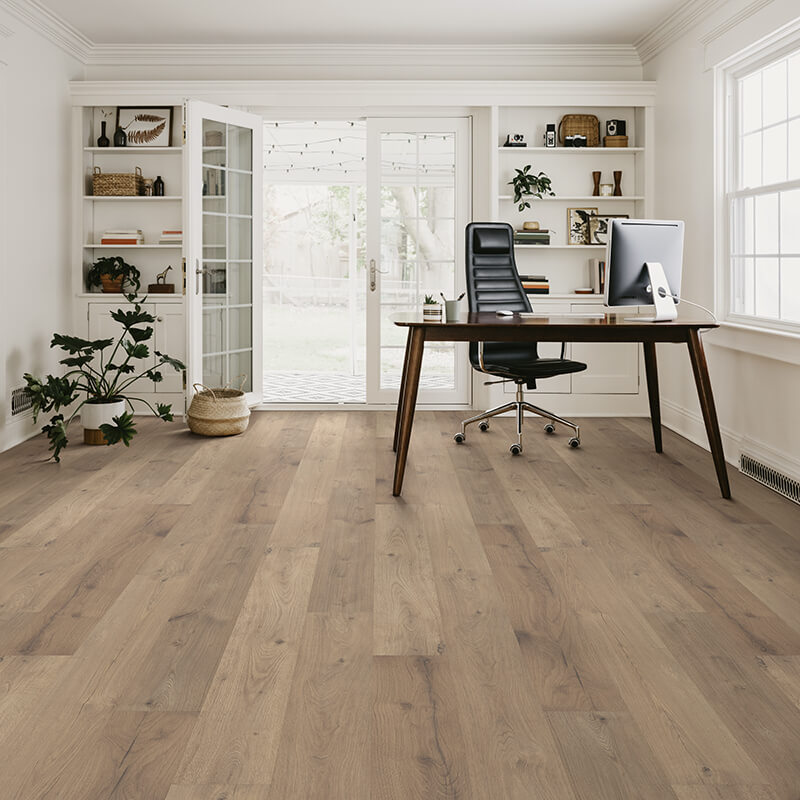
Sound Control
Noise behaves differently in a workspace, especially during virtual meetings. Flooring affects how your voice carries, how chair movement sounds, and how much household activity reaches your desk.
The right materials and installation components can noticeably improve acoustic performance.
- Echo Reduction: Hard, reflective surfaces amplify sound, which can create a hollow effect on calls. Carpet, padded underlayment, or acoustic backings absorb sound waves and improve voice clarity.
- Impact Noise Control: Quality underlayments beneath laminate, hardwood, or luxury vinyl reduce the tapping and rolling noise that can travel to rooms below.
- Room-to-Room Separation: Dense carpet cushions and attached acoustic pads help buffer sound between shared walls, improving privacy during focused work or meetings.
Comfort
Long workdays make comfort a functional requirement rather than a luxury. The surface beneath your feet influences fatigue, posture, and overall physical strain. Comfort depends not only on the surface material but also on what supports it underneath.
- Underfoot Support: Flooring with slight resilience, such as cork-backed luxury vinyl or well-cushioned carpet, reduces stress on joints during extended standing.
- Subtle Cushioning: High-quality carpet padding or acoustic underlayment adds softness without compromising stability under rolling chairs.
- Temperature Considerations: Softer surfaces feel warmer underfoot, while radiant-compatible products can make harder floors more comfortable year-round.
- Ergonomic Pairing: Standing desks, anti-fatigue mats, and supportive underlayments work together to create a floor system that supports both movement and stillness throughout the day.
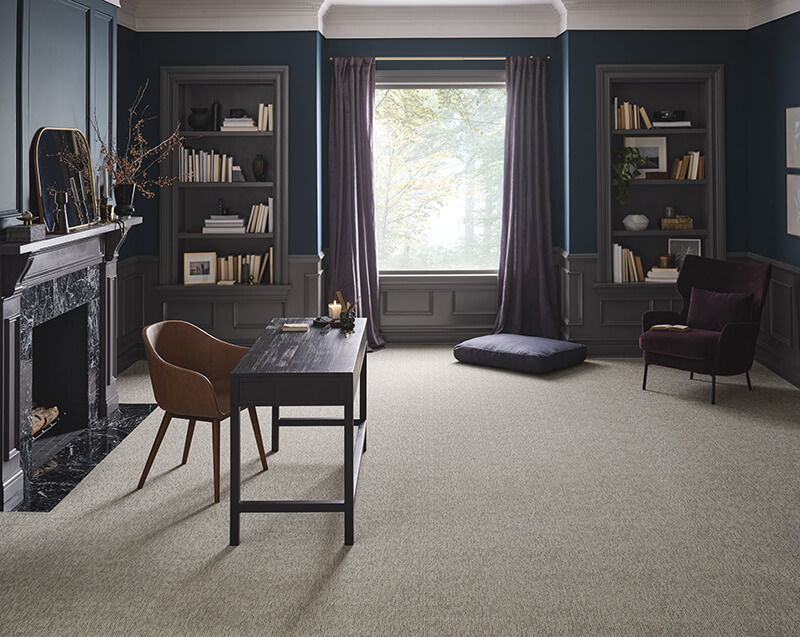
Flooring Options Based on How You Work
Different work styles call for different flooring solutions. The best choice depends on how the space is used day to day.
Hardwood for a Refined, Executive Look
Hardwood floors remain a strong option for home offices that lean traditional or tailored. Species like oak and hickory offer the density needed to handle office furniture, especially when finished with a matte or low-satin sheen that disguises wheel marks better than high-gloss coatings. Hardwood pairs well with executive desks, built-in shelving, and rooms that double as libraries or guest spaces.
Luxury Vinyl and Laminate for High-Traffic Use
Rigid-core luxury vinyl and high-performance laminate excel in offices with constant movement or multi-use demands. These materials resist dents, scratches, and rolling wear while maintaining a consistent appearance. Their dimensional stability makes them well-suited for standing desks, frequent chair movement, and spaces that transition easily from workday to family use.
Carpet for Quiet, Focused Work
Low-pile carpet remains one of the most effective choices for sound absorption and underfoot comfort. Tight, dense constructions allow chairs to roll smoothly without snagging while reducing echo and noise transfer. Carpet also adds warmth, making it ideal for offices used early in the morning or late into the evening.
Making the Office Work with the Rest of the Home
A home office does not exist in isolation. Flooring should connect visually with adjacent rooms while meeting the practical needs of the workspace. Consistent tones, complementary textures, and thoughtful transitions help the office feel intentional rather than separate.
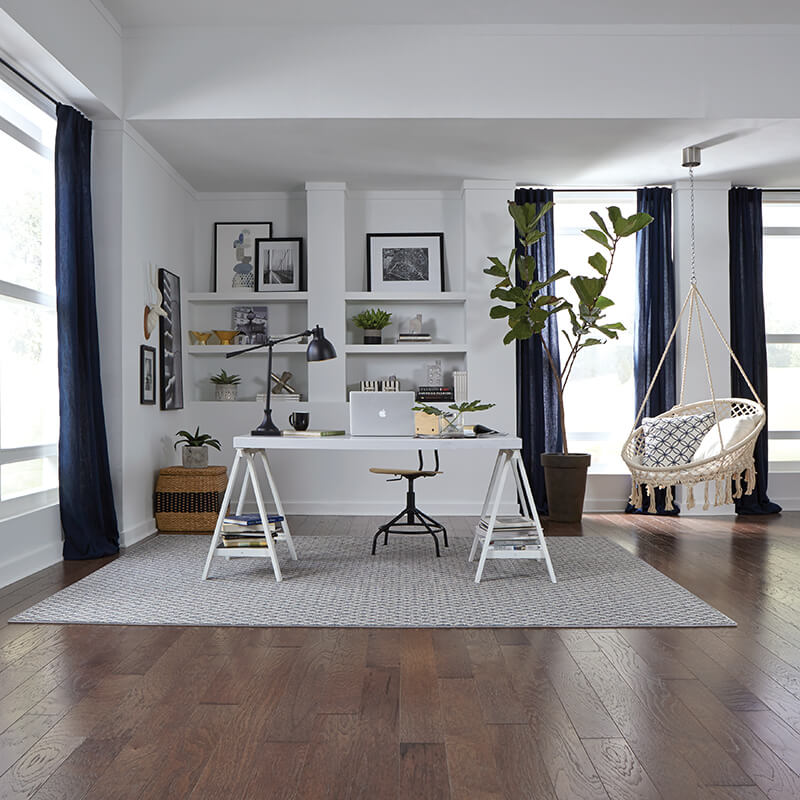
Area rugs, desk pads, and coordinated finishes can further tailor the space without compromising performance. When selected carefully, office flooring supports productivity while blending seamlessly into the overall design of the home.
A Smart Investment in Comfort and Performance
The right home office floor supports more than furniture. It supports focus, comfort, and the rhythm of daily work. A surface designed for rolling traffic, sound control, and long hours underfoot can reduce fatigue and protect your space for years to come.
At CarpetsPlus COLORTILE of Hutchinson, we can help you evaluate flooring options based on how you actually work, from chair type and desk weight to sound needs and comfort preferences. Visit us in Hutchinson KS to see materials up close, compare underlayments, and choose a solution that supports both productivity and everyday living.